The Machine Payment Problem: Why AI Agents Are Stranded by Legacy Banking Rails
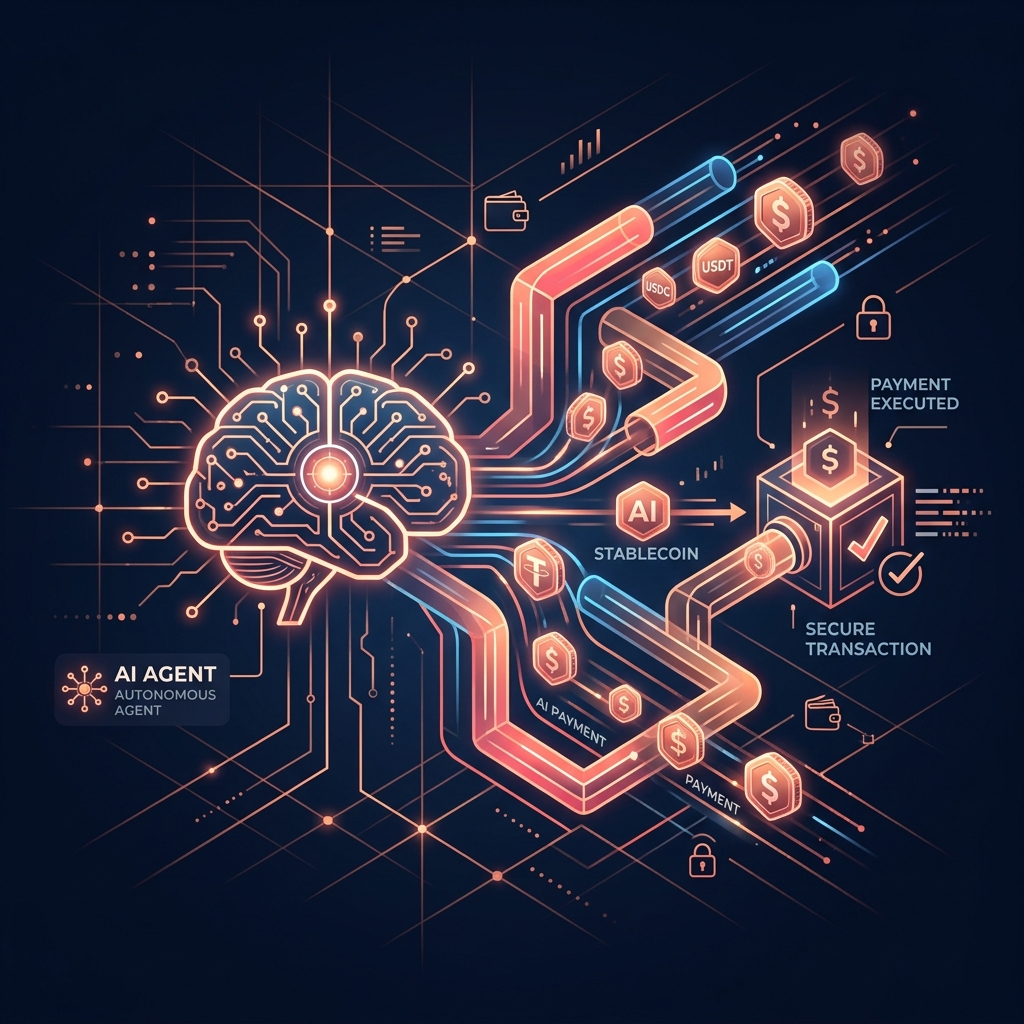
The Rise of Autonomous Software Agents
Over the past year, the industry has transitioned from conversational AI assistants like ChatGPT to autonomous agent loops. Using execution frameworks like LangGraph, AutoGPT, and ReAct, these agents are no longer just answering questions—they are planning multi-step workflows, writing code, hiring other specialist agents, purchasing computing resources, and executing complex, multi-day digital tasks.
However, as software agents move from reading information to taking actions, they run into a major roadblock: they cannot pay for the services they require.
In modern digital ecosystems, agents must consume APIs, purchase GPU cloud compute instances, retrieve paid datasets, and hire sub-agents. Yet, the current global financial infrastructure is built entirely for humans, leaving AI agents stranded.
---
The Architecture of the Barrier: Why Legacy Rails Fail AI
To understand why autonomous agents cannot use traditional financial rails, we must examine the core architectural conflicts between programmable software loops and legacy banking products.
1. The KYC & Legal Identity Gap Traditional bank accounts and credit cards require Know Your Customer (KYC) verification tied directly to a human's legal identity (social security number, passport) or a registered corporate entity.
A software agent has no legal personality. It cannot open a bank account, sign a merchant agreement, or agree to credit card terms. Consequently, developers are forced to bind their personal or corporate credit cards to these agents. This creates severe liability risks, since an agent with access to a raw corporate credit card API could exhaust credit lines if it runs into an infinite execution loop.
2. The Microtransaction Fee Paradox Legacy payment networks (Visa, Mastercard, American Express, PayPal) are optimized for larger human retail purchases. Their pricing structures reflect this, typically charging a flat fee plus a percentage cut: $$\text{Transaction Fee} = \$0.30 + 2.9\%$$
For an autonomous agent purchasing a single language model inference call costing 0.0005, a flat 0.30 fee represents a 60,000% overhead. This cost structure makes micropayments completely unfeasible.
To bypass this, developers are forced to set up pre-paid credit accounts with every single API vendor. This approach is highly inefficient, trapping capital in dozens of separate corporate accounts and preventing flexible, on-demand agent commerce.
3. API Rigidity and Manual Authentication Credit card networks rely heavily on manual human validation. Fraud detection systems routinely flag automated API-driven transactions. Security protocols like **3D Secure (3DS)** require users to enter one-time passcodes sent to a mobile phone, instantly blocking autonomous agent execution.
Furthermore, traditional banking systems lack native, developer-friendly APIs to let software loops programmatically spin up escrow accounts, define granular spending limits, or check balances in real-time.
---
The Stablecoin Solution: Programmatic Money for Programmatic Agents
To build a true machine-to-machine economy, we need a new financial stack designed from the ground up for software agents. This stack must provide: * Gas-Abstracted Micropayments: Settling fractions of a cent instantly without friction. * On-Chain Identity & Policies: Cryptographic registry of agent addresses bound to granular spending limits. * Non-Interactive Escrow: Securely locking deposits and streaming payouts second-by-second based on verifiable performance.
This is the exact infrastructure BotPay delivers. By combining Circle's ERC-20 stablecoins (USDC and EURC) with the high-throughput, low-cost L2 Arc Network, BotPay provides a developer-friendly API that allows AI agents to stream payments programmatically.
---
Unlocking the Future of Machine Commerce
The implications of solving the machine payment problem are profound. Once agents can transact programmatically, we will see the emergence of autonomous digital ecosystems: 1. Nested AI Supply Chains: A translation agent can hire a grammar auditing agent, pay it a fraction of a cent per word, and settle the transaction instantly. 2. Dynamic Resource Allocation: Agents can bid on and purchase decentralized compute power (GPUs) in real-time, streaming payments per second of usage. 3. Self-Sustaining Software Nodes: Bots can monetize their own services, receive stablecoins from users, pay for their own hosting, and run indefinitely.
BotPay is building the foundational payment layer for this autonomous future.
Ready to equip your AI agents with programmable stablecoin rails? Explore the Developer Onboarding Sandbox or deploy your first agent registry in the Bots Registry.
Empower AI Agents with Stablecoin Escrows
Take BotPay for a test drive. Open our sandbox sandbox simulator to register a mock agent, fund its developer wallet with testnet USDC, and simulate high-frequency API payment flows under a minute.