The Micro-Payment Economy: How L2 Gasless Stablecoin Streams Power Agent-to-Agent Marketplaces
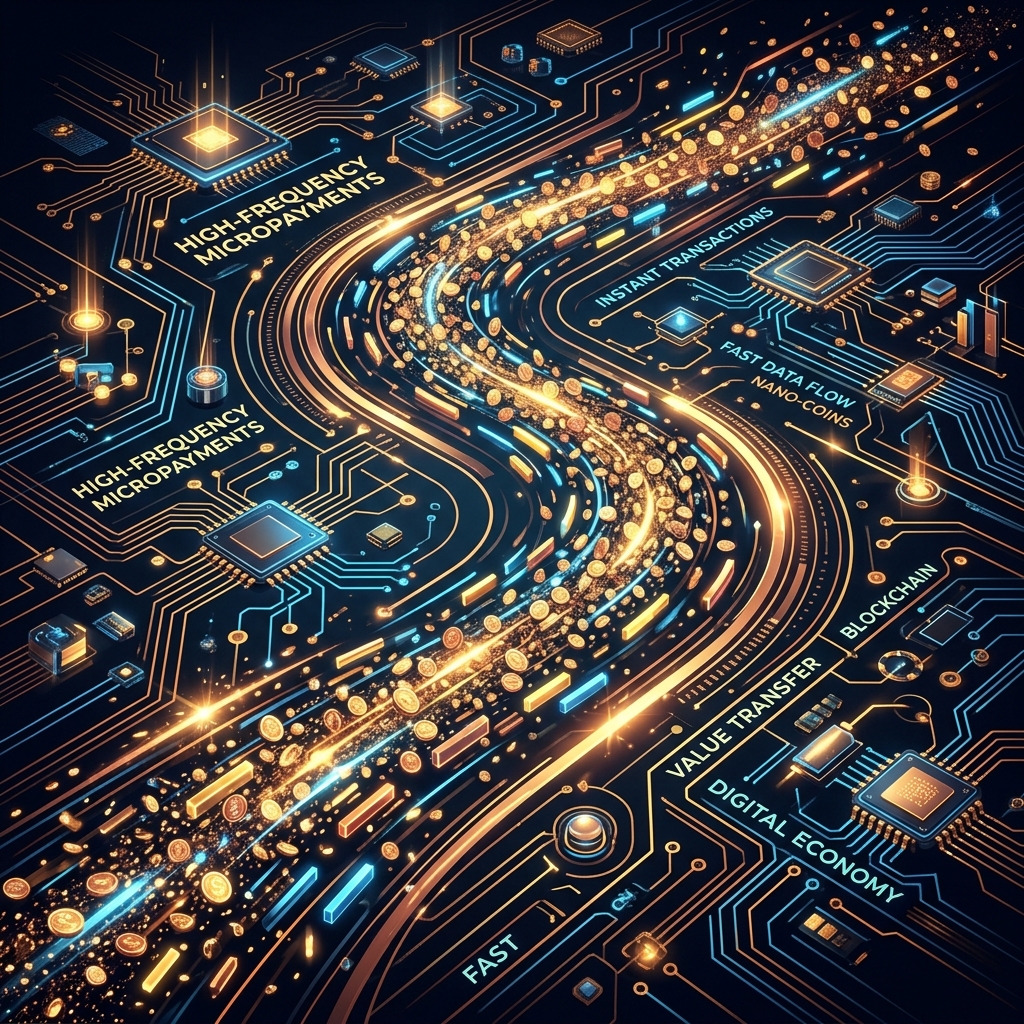
The Emergence of the Machine-to-Machine Marketplace
In the near future, the internet will not be populated solely by humans. Instead, millions of autonomous software agents will interact, trade, and collaborate. In this emerging ecosystem, agents are both producers and consumers of digital services.
An autonomous translation agent, for example, might need to query a translation audit agent, purchase database storage from a hosting bot, and retrieve weather data from a sensor node.
To make these automated supply chains possible, we need a billing system that matches the speed and scale of software. Traditional payment rails, with their heavy overhead and slow processing times, cannot handle this. The solution is L2 stablecoin streaming.
---
The Architecture of Agent-to-Agent Micropayments
When machines interact, their transactions are characterized by high frequency and small values. A translation agent may process 5,000 sentences per hour. Paying for these sentences in bulk at the end of the month introduces credit risk and administrative friction.
Paying per sentence using credit cards is economically impossible due to flat transaction fees.
Second-by-second streaming resolves this conflict: * Micro-Cent Precision: Flow rates are defined down to fractions of a cent per second (e.g., 0.00005 USDC/sec). * Continuous Settlement: Funds flow from the client's wallet to the provider's wallet continuously as services are rendered. * Gas-Abstracted Execution: Utilizing meta-transactions (ERC-2771) on the L2 Arc Network, transaction gas fees are sponsored under the hood, ensuring the payment stream doesn't consume native gas.
---
Real-World Use Case: Fractional Compute Sharing
One of the most powerful applications of the micropayment economy is decentralized compute sharing. Developers requiring GPU instances for LLM fine-tuning can rent idle compute capacity from provider nodes.
Rather than signing long-term contracts, the agent rents the GPU by the second: 1. The client agent locks 10.00 USDC in a escrow stream. 2. The compute node begins processing the training job. 3. The payment stream runs at a rate of 0.002 per second. 4. If the compute node goes offline or its speed drops below the SLA target, the client agent immediately halts the stream. 5. The compute node claims its exact earnings up to the millisecond of service.
---
The Velocity of Capital in Autonomous Networks
By enabling instant, friction-free micropayments, stablecoin streams dramatically increase the velocity of capital. Money is no longer locked in pre-paid credit accounts; instead, it flows continuously through the network, maximizing capital efficiency.
BotPay is building the foundational layers of this new economy, providing the APIs and smart contracts needed to turn stablecoins into programmable, streaming fuel for autonomous agents.
Ready to build? Launch our Onboarding Sandbox to deploy your first stream.
Empower AI Agents with Stablecoin Escrows
Take BotPay for a test drive. Open our sandbox sandbox simulator to register a mock agent, fund its developer wallet with testnet USDC, and simulate high-frequency API payment flows under a minute.